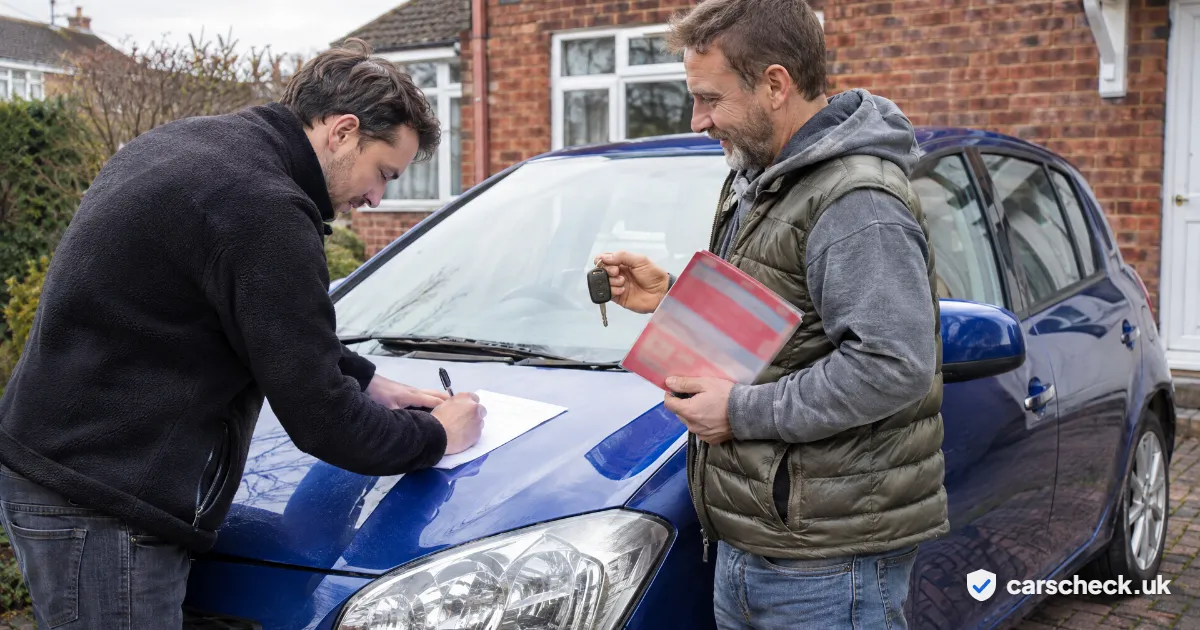
No. A V5C log book is not proof of ownership. It records the registered keeper of a vehicle, which is the person DVLA has in its register as keeping it. Who owns the car is a separate question, and the log book does not answer it.
The short version:
- The V5C names the registered keeper. DVLA itself says it is not proof of ownership.
- The owner is the person the car belongs to. That is shown by a bill of sale, a receipt, an invoice or a finance agreement, not by the log book.
- Keeper and owner are often two different people: a car on finance belongs to the lender until it is paid off.
- If the seller does not own the car, the law says the buyer does not own it either, whatever the log book says.
What does the V5C actually record?
The keeper. GOV.UK lists what a V5C shows: the registration number, the vehicle keeper's name and address, and information about the vehicle. The word "owner" is not in that list.
The law draws the same line. The regulations that govern vehicle registration define the keeper as "the person by whom that vehicle is kept", and the registered keeper as "the person for the time being shown in the register as the keeper of that vehicle". Neither definition mentions who the vehicle belongs to.
DVLA has put it more bluntly. Criminals get away with selling stolen and cloned cars, it says, because many motorists believe that a V5C registration certificate is proof of ownership, and it is important that motorists know that this is not the case.
What is the difference between the registered keeper and the owner?
| Registered keeper | Owner | |
|---|---|---|
| Who it is | The person shown in DVLA's register as keeping the vehicle | The person or company the vehicle belongs to |
| Where it is written | In the V5C log book | In the paperwork of the sale: bill of sale, receipt, invoice or finance agreement |
| What DVLA expects | To tax the vehicle or declare it off the road, and to keep the log book up to date | Nothing as an owner: the register is a register of keepers |
| Who can sell the car | Only if they also own it, or have the owner's consent | The owner |
They are often the same person. These are the common cases where they are not:
- A car on finance. Citizens Advice explains that under hire purchase you do not own the goods until you have paid in full. The driver is the keeper and has the log book; the lender is the owner. Our guide to outstanding finance on a car covers each type of agreement.
- A hired or leased car. GOV.UK says you need a VE103 vehicle on hire certificate to show you are allowed to use a hired or leased vehicle abroad, in place of the log book an owner would carry.
- A car one person paid for and another one runs. A log book only has one person's name in it, so the keeper on it and the person who bought the car can be two different people.
What proves you own a car?
The paperwork of how you got it. DVLA's own recommendation to buyers is to ask to see proof of ownership of a vehicle, such as a bill of sale, and to check the vehicle's service records and MOT certificate. In practice that means:
- From a dealer: the sales invoice in your name.
- From a private seller: a receipt signed by both of you, with the date, the price, the registration number and the VIN, and the seller's name and address.
- On finance: the agreement while you are paying, and the lender's confirmation that it has been settled once you have finished.
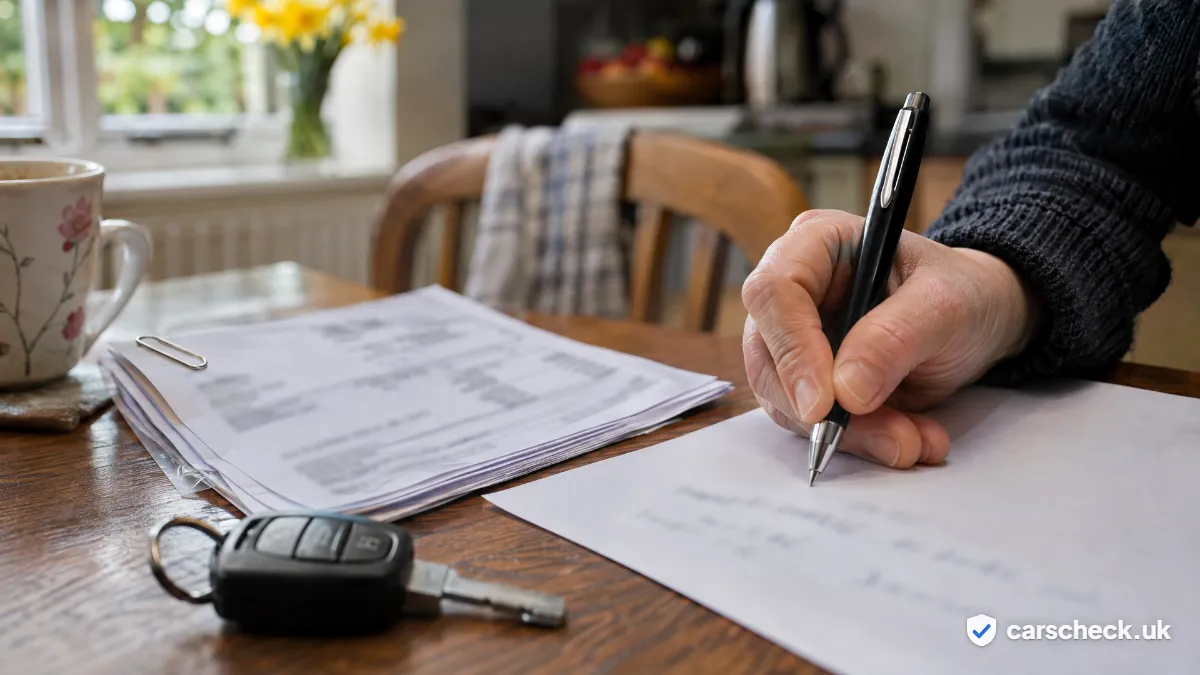
Keep that paperwork for as long as you have the car. It is what you would show if the sale were ever questioned, and it is what the next buyer should ask you for.
Can someone sell a car they do not own with a V5C in their name?
They can try, and the log book will not stop them. What the law says about the result is in section 21 of the Sale of Goods Act 1979: where goods are sold by a person who is not their owner, and who does not sell them with the owner's authority or consent, the buyer acquires no better title to the goods than the seller had.
| The car turns out to be | What happens to the buyer |
|---|---|
| Stolen | A thief has no title to pass on, so the buyer does not become the owner. See how to check if a car is stolen. |
| On hire purchase or conditional sale | Part III of the Hire Purchase Act 1964 gives ownership to a private purchaser who buys in good faith without notice of the agreement. It applies in England, Wales and Scotland. |
In both cases the seller has broken the contract, because the law implies a term that the seller has the right to sell: section 12 of the same Act for a private seller, and section 17 of the Consumer Rights Act 2015 for a trader. Getting your money back from someone who sold you a car that was not theirs is another matter, which is why the checks come before the payment.
How do you check the seller really owns the car?
- Ask for the log book and check it. DVLA advises that you should not buy a vehicle that does not have a V5C. Our page on what a V5C looks like shows what a genuine one has.
- Ask for proof of ownership. The seller's own invoice or receipt from when they bought the car, as DVLA recommends.
- Look at the service records and the MOT certificate. They should fit the car, the mileage and the story you have been told.
- Check for finance. Citizens Advice notes that simple checks tell you whether the current owner still owes money on the car. An outstanding finance check does it from the number plate.
- Check it is not recorded as stolen. A stolen vehicle check looks at the theft markers held against the registration and the VIN.
- Leave with a signed receipt and the green new keeper slip.
Keeper and owner FAQ
Do you get a log book with a car on finance?
Yes. The log book goes to whoever is registered as the keeper, and the keeper does not have to be the owner. That is exactly the position with a financed car: on hire purchase or PCP the lender owns the vehicle until the agreement is settled, whatever name is on the V5C.
Can DVLA tell you who owns a car?
Not as such. What DVLA records is the registered keeper, and even those details are only released if you apply by post and show a reasonable cause, such as finding out who was responsible for an accident.
Can a V5C be in two names?
No. GOV.UK's instructions for changing the name on a log book say it only has one person's name in it. Two people can own a car together, but only one of them is its registered keeper.
Does the V5C have to be in your name to sell the car?
DVLA's online service to tell it a vehicle has been sold works with the reference number of the latest log book, and the paper route is the keeper filling in the log book. Either way it is the registered keeper who tells DVLA, and a careful buyer will ask why the person selling is not the person on the V5C. The details are in our V5C log book guide.
Sources
- DVLA encourages motorists to get a red vehicle registration certificate (DVLA, GOV.UK)
- Vehicle registration: new registrations and Vehicle registration: new and used vehicles (GOV.UK)
- Road Vehicles (Registration and Licensing) Regulations 2002, regulation 3 (legislation.gov.uk)
- Sale of Goods Act 1979, section 21 and section 12 (legislation.gov.uk)
- Consumer Rights Act 2015, section 17 and Hire Purchase Act 1964, Part III (legislation.gov.uk)
- Hire purchase and conditional sale and Buying a used car (Citizens Advice)
- Request information about a vehicle or its registered keeper from DVLA, Change your name on your vehicle log book (V5C), Tell DVLA you've sold, transferred or bought a vehicle and Taking a vehicle out of the UK (GOV.UK)
Sources checked on 17 November 2026.